
Suzhou-Hua #6
Hong Kong Part 1.

SZH#6’s song is ‘Cities in Love’ by Shigeru Umebayashi.
I spent the night before in Shanghai and the city was full in places. Walking from The People’s Square to The Bund took an hour-and-a-half on account of the crowd squeezing itself in between the two tall, young-but-old-looking edifices of Nanjing road. Everyone stopped for a photo in front of the Fairmont Peace Hotel. But it was cold after a while and so I watched the crowd melt into the bluish back streets of Shanghai and sauntered along beneath cable car lines.
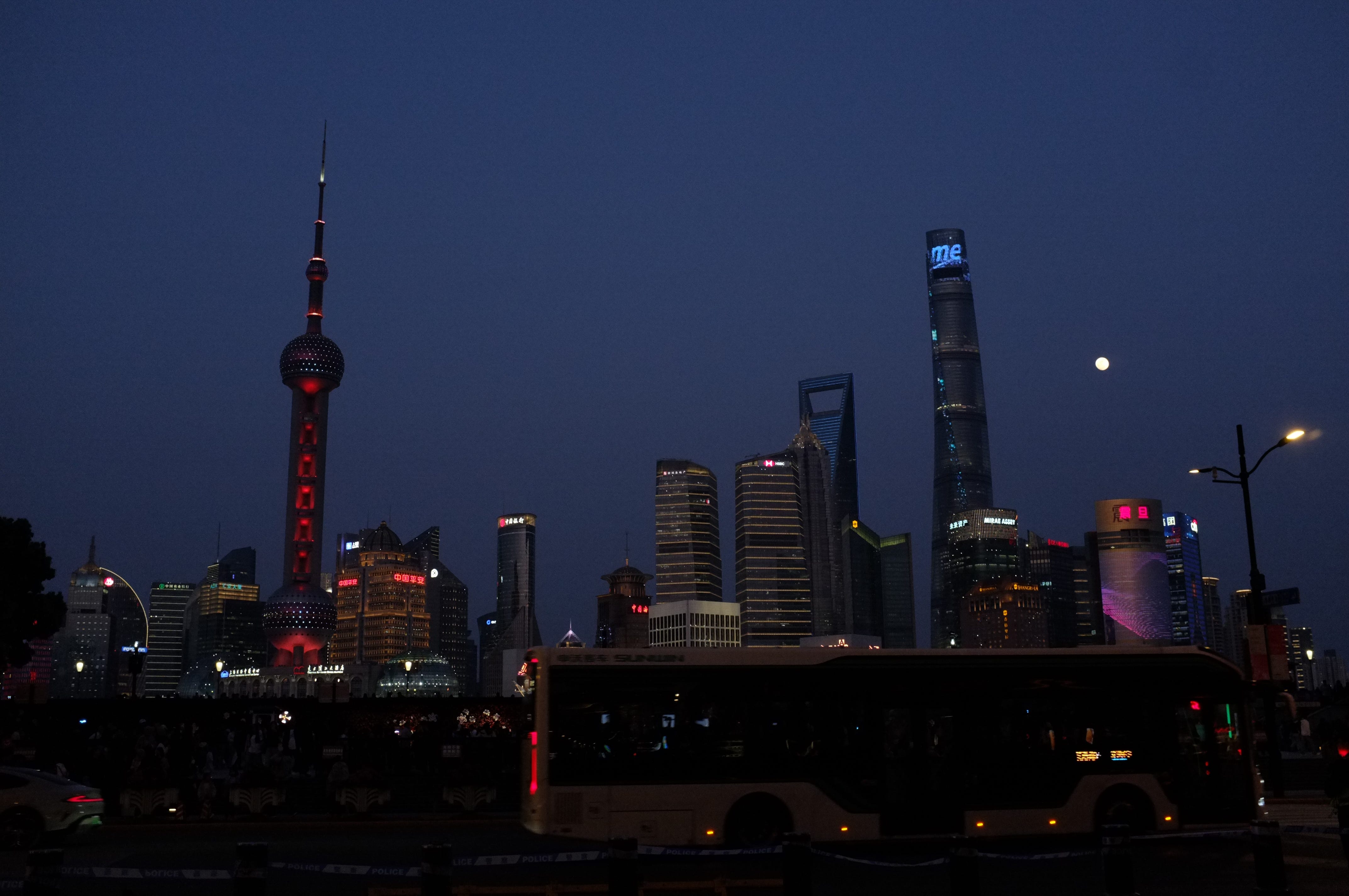
On a ferry for the other side of Huangpu river, the bottom deck was filled end-to-end by delivery drivers on electric bikes, each in the distinct apparel of their employer: yellow, orange, green, and blue. Those in yellow, driving for the delivery service Meituan, sported plastic kangaroo ears on their helmets. It was full and it was silent. They all sat there in that ferry in Shanghai as they sit at red lights in Suzhou (and often as they sit while operating their vehicles), engrossed in the lights blaring from one of their two or three mobile phones. The 30 or so drivers sat on their bikes in the ferry’s metal hull in a hunched or bowing pose, the silhouette of temple worship. Though instead, there and then, it was an image of the kind of isolation which is the twin of convenience. They earn very little, a few Australian dollars per delivery, to shuttle food, groceries, cleaning supplies, etc to their customers. Reception of the delivery will be a phone call and your things left in a locker or on a bench. The whole process is full of people, you the orderer, the people who prepare the goods at the shop or restaurant, and the delivery driver; even so, the interaction is almost entirely without any human interaction. Ultimately, the freedom afforded by such as these ends up being very close, on the psychological continuum, to loneliness. Maybe this will come up later on in SZH. It was as quiet on the upper deck and the air still had the early spring’s night chill. A few other solo travellers stood scattered on the deck, in a pattern which could be more or less replicated by observing the end position of a handful of billiard balls scattered by a powerful drive. What separated us was that we did not know each other and had no reason to start.
Shanghai is a city with a bigger population than Australia. Therefore, to me, ‘crowded’ has acquired a meaning beyond “hard to find somewhere to set down,” namely, “how it feels to be a meaningless face in a thicket of people.” It’s a sad, floral, weak-cordial kind of feeling. Sonder, a neologism created to describe the peculiar sorrow of realising, maybe on the highway or walking through a shopping centre or something, that the lives of every person you pass are as dense and complex as yours. The sadness of sonder is that the complexity, the richness of the lives of strangers, is something which can only really be glimpsed at like a louse on the frayed end of an Anatolian rug. But what I felt wasn’t a bitter yearning for the chance to see the beauty of the tapestry. I felt sonder’s shadow. That is to say, this louse found it hard not to think, regardless of what it believes, that there is meaninglessness in numbers. That the lives behind all the faces did not belong to fellow subjects but were merely other objects of the street, because not in spite of their numerosity. Common as dirt. This is a human way of seeing things, taking rarity for value. I really do not believe that is the way things are but it’s how everything looked from inside the crowd looking in.
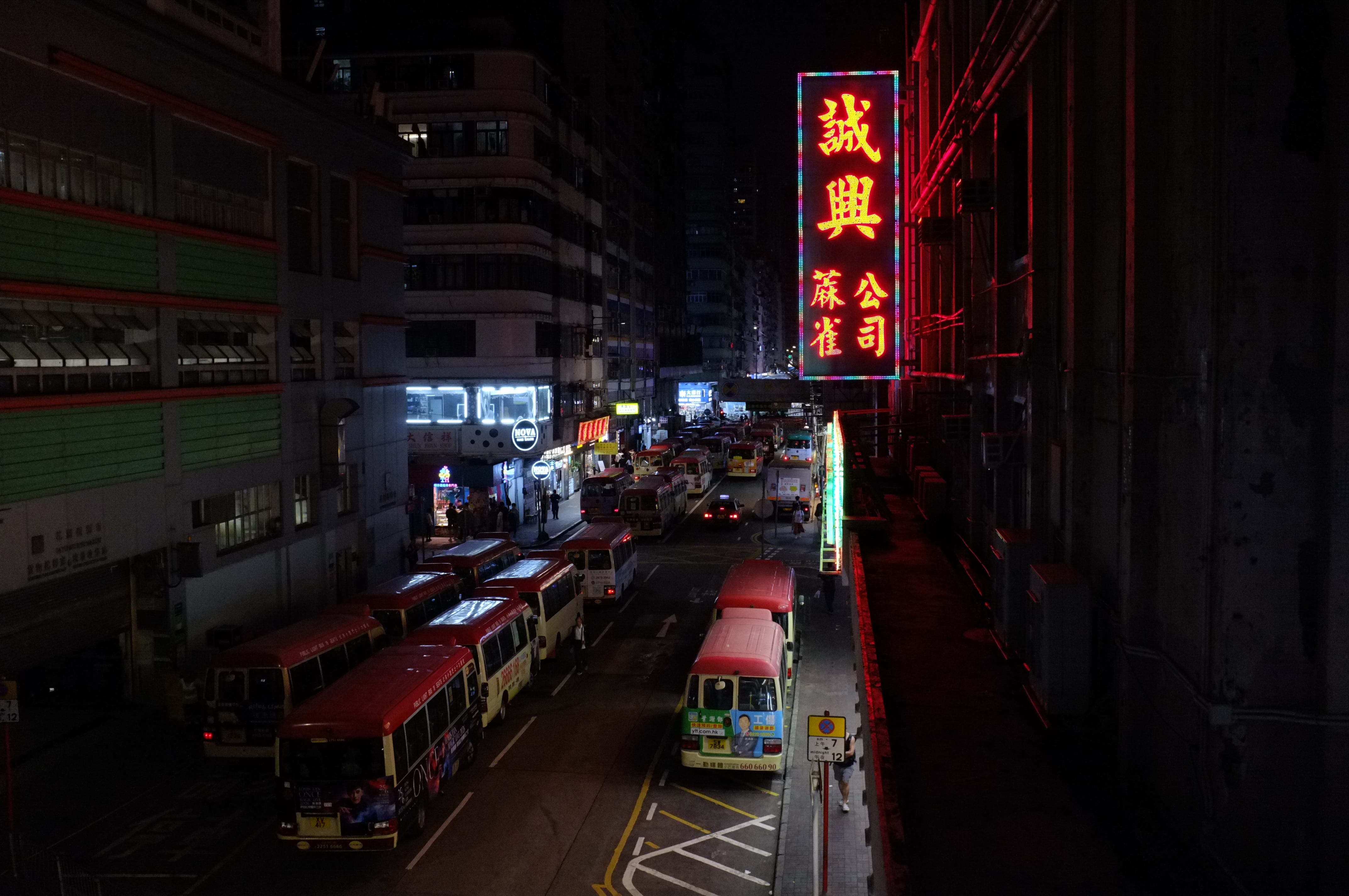
When I walked through the hallway at the end of baggage collection in Hong Kong airport I saw the first two faces I really knew in months. Mum cried a bit when she hugged me. She told me that she told my little sister that I would be used to crowds by now, so don’t expect him to be hanging back from everyone else when everyone comes down the hallway. Apparently I didn’t. We chatted mostly about little things. Like the tea they had just tried at the Hostel and how it had been deemed “the coffee of tea” by my little sister. Hong Kong is a lot less convenient than Mainland China. You need an Octopus card to pay for public transport. You need to buy a physical card with cash. You can only top up the Octopus card with cash. You can only top up the Octopus card in cash denominations of $50HKD or $100HKD. Certain Octopus cards can be refunded for the value of the card and anything on it, others can not. Some shops take Octopus cards as payment, others do not. You have to carry many denominations of cash. Some of the coins are weird as, by the way. We sat together on the train and looked out the window. Mum told me she and my little sister had been struck by how all the lights implied all the windows and all the windows implied all the people who had been packed in like that to all of those buildings while they rode the line the night before. She couldn’t imagine so many people. I told them about coffin homes. We rode the train for about 40 minutes and spoke mostly of little things. Sometimes I looked at them. Not the way of looking which is a part of communicating: reading emotions in faces and watching lips for comprehension, etc, but the way of looking that’s just receiving. It’s a cousin of watching, I guess. If you do it to (notice: to) someone long enough they’ll smile a little and say “…what?” Even in the middle of a thought. They looked at me like that too.
The doors of the MRT clattered open. A small crowd heaved itself on to the platform as an equal and opposite crowd heaved itself off. Sham shui po station. The air is immediately warmer and wetter and you regret wearing jeans. Dim lights and stained cement. So many different people. I was struck by the diversity of the crowd. Young and old, of various shades of every skin tone under the sun, in all sorts of clothes: burkas, turbans, rip-off apparel (notably a ‘Njke’ hat), barbie-pink plastic sunglasses and worn out thongs, all pattering together and babbling that precise babble of a handful of languages, beneath algae-green tiles and upon a lino floor. And none of them staring at you. Exit at Golden Computer Centre. Another crowd swelled in the square. The market at the end of the station seemed to carry the goods of every name-brand you can think of, spelt, as you imagine, an unimaginable number of ways. I walk towards the YHA and with every step feel the brutal swamp-like conditions in my jeans setting in. A middle-aged woman flapped washing out the window of a building enmeshed in bamboo scaffolding. My little sister wondered aloud about what would happen if a shirt fell down to the street below. Our accommodation, the historic Mei Ho house, constructed as emergency residence after the shek kip mei fire. A fire started christmas day 1953 when a bucket of molten rubber burnt a shanty town to the ground which had been populated exclusively by immigrants from the mainland, killing two and displacing 53 000. It is now as it was then.
Hong Kong is the city which bears in its bones the impression of East meets West. It’s a city of contradictions and many moods. It’s old and limping. It’s beautiful. I took it as a point of significance that they came to Hong Kong on their way to the UK. I joked like three times to two different people that Hong Kong is exactly half way between England and China. I was wrong about that and I knew it, but as the stan who wrote the preface to Tolstoy’s “What is Art?” in 1899 after admitting a contradiction in Tolstoy’s argument once said, “I venture to think that anyone of intelligence, and free from prejudice, reading this book (blog?) carefully, need not fail to reach the author’s intention.” Over the next few posts I am going to talk some more about Hong Kong as a place. This post has been seriously difficult to write. Every time I sat down to de-blank the page I’d end up profoundly frustrated by every attempt I made to try and make clear what I want to say about Hong Kong. Mum, on the phone, suggested that I break it into piece. So I will. And I guess in the spirit of not beating around the bush, I can say that Hong Kong is a place where I didn’t feel alone.
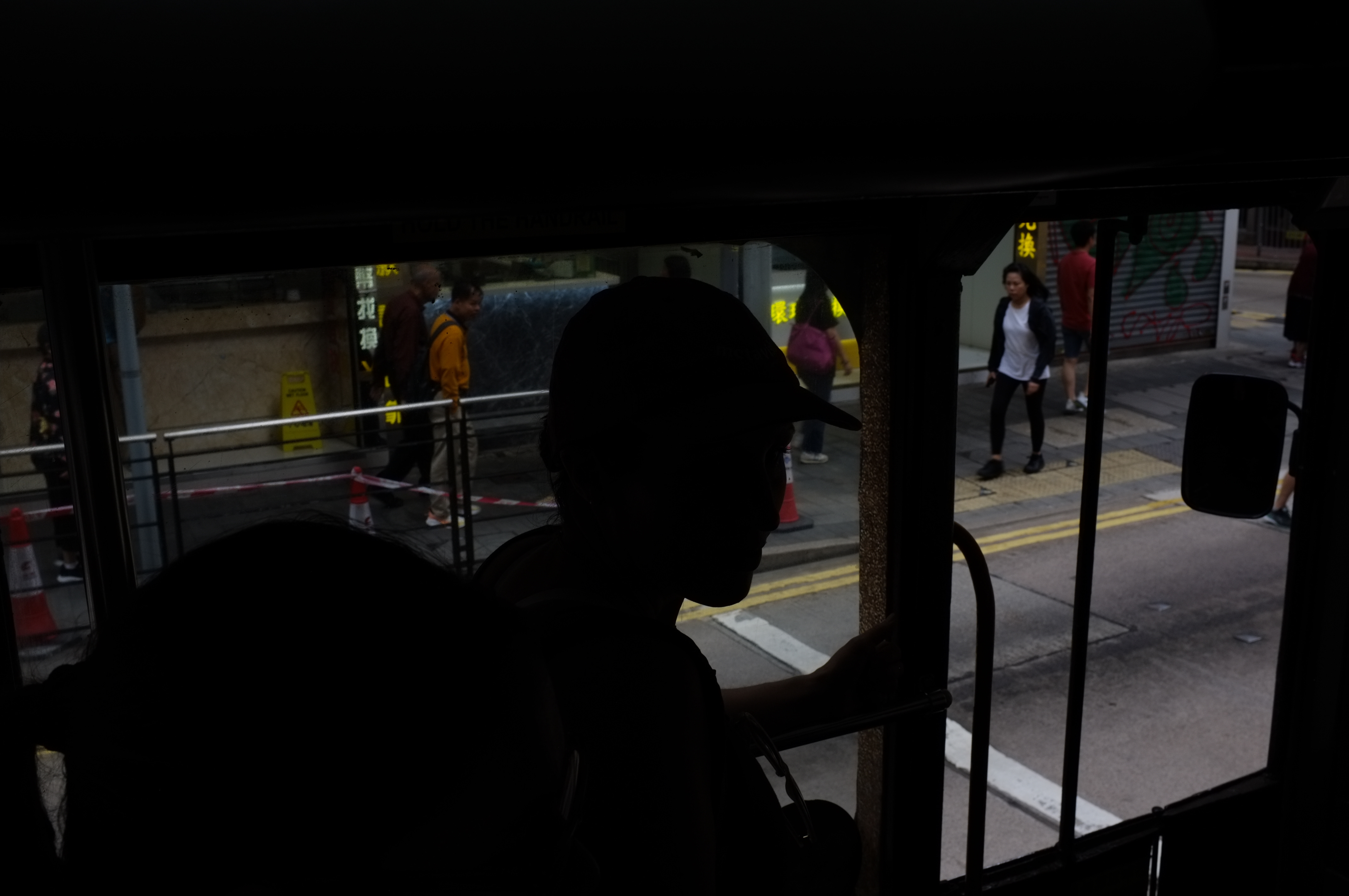
Mum said, at some point during the weekend, apropos of nothing outside of her head, “I was worried that as nice as this is it would make things harder for you when we leave.” It did. I asked her at a different point during the weekend, “Did I do the right thing by deciding to go straight through airport security as soon as possible when I left? Do you think I should’ve spent more time with you guys instead of ripping the band aid off?” She said she thought I made the right decision because waiting wouldn’t’ve made it easier to go. I didn’t cry when I left Australia, but I did leaving Hong Kong. Maybe it was because I knew better what I was leaving behind and what I was returning to. It was actually quite embarrassing. I was sat right at the back of the plane. The guy next to me was the kind of crazy you, for reasons unbeknownst to any of us, exist only on public transport. He wore a socceroos jersey so I knew where he was from. But the guy was a menace. He had a copy of War and Peace open to the first page. Fresh. Then, moments before take off, produced a glad-wrapped croissant from his pocket. Every bite went like this: he’d unwrap the squashed croissant, curl his lips back, teeth-pinch a patch of pastry, then wrap it back up. I watched him do this over and over again. But all the while fighting back the storm swelling behind my eyes. I’d scruntch my face and stare at different parts of the plane, hide my face in my heads, wipe tears as quickly as they came, making my eyes red and my cheeks hurt. We made a pretty weird pair there at the back of the plane.
P.s.,
This one is super fragmented. I spent like twice the normal amount of time writing it and ended up with about half the quality. Hopefully the next one will be better.